Difficulty Settings Explained — Combat, Stealth, Naval & Activities
AC Black Flag Resynced's four independent difficulty sliders explained: Combat, Stealth, Naval Combat, and Activities. Detailed effects of Forgiving, Intended, and Hard — plus recommended settings for every playstyle.
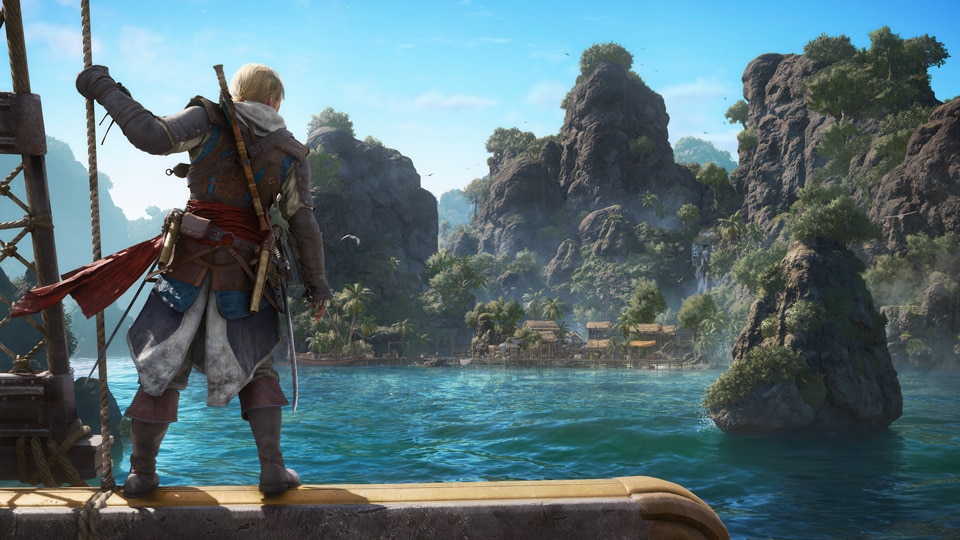 Resynced replaces the original's single difficulty toggle with **four independent sliders**. Each controls a different aspect of the game, and you can change them any time from the settings menu — no restart required.
The Four Sliders
| Slider | What It Controls |
|---|---|
| Combat | Sword fights, enemy aggression, Edward's damage |
| Stealth | Detection, search behavior, alert states |
| Naval Combat | Jackdaw damage, bracing, enemy ship behavior |
| Activities | Diving, harpooning, exploration challenges |
Each slider has three levels: Forgiving, Intended, and Hard.
Combat Difficulty
| Aspect | Forgiving | Intended | Hard |
|---|---|---|---|
| Enemies attacking at once | Fewer enemies engage simultaneously | Default — balanced group pressure | More enemies attack at once |
| Attack frequency | Slower, more telegraphed | Default timing | Faster, less warning |
| Edward's damage dealt | Higher — enemies die faster | Default | Lower — fights last longer |
| Edward's damage taken | Lower — more mistakes allowed | Default | Higher — fewer hits to die |
Forgiving is for players who want the story without combat frustration. Enemies hang back, attacks are predictable, and Edward hits hard.
Intended matches the original game's feel — the developer's baseline for difficulty.
Hard demands precision. Master the perfect parry, use your tools, and don't get surrounded. On Hard, a group of four guards is a genuine threat.
Stealth Difficulty
| Aspect | Forgiving | Intended | Hard |
|---|---|---|---|
| Detection distance | Short — guards need to be close | Default | Long — guards spot you from further away |
| Time to spot Edward | Slow — generous reaction window | Default | Fast — nearly instant detection |
| Search duration | Short — guards give up quickly | Default | Long — guards are persistent |
| Alert states | Forgiving — high-profile acts draw less attention | Default | Hard — loud actions cause chain reactions |
Forgiving means you can make mistakes and recover. Guards are nearsighted and forget you exist quickly.
Intended provides balanced tension — stealth matters, but you have room to adjust.
Hard turns guards into hawks. You need to use shadows, cover, and crouch constantly. One mistake can cascade into full alert.
Tip: If tailing missions frustrate you, drop Stealth to Forgiving. If you want the tension of being hunted, crank it to Hard.
Naval Combat Difficulty
| Aspect | Forgiving | Intended | Hard |
|---|---|---|---|
| Jackdaw damage dealt | Higher — sink enemies faster | Default | Lower — longer engagements |
| Jackdaw damage taken | Lower — more survivable | Default | Higher — mistakes hurt |
| Bracing effectiveness | Stronger — brace absorbs more | Default | Weaker — brace does less |
| Enemy cooldowns | Longer — enemies fire less often | Default | Shorter — enemies fire more often |
| Auto-repair outside combat | Faster and more complete | Default | Slower and partial |
Forgiving makes the Jackdaw tanky and lethal. You can sail into a fleet of five ships and blast your way out.
Intended is the baseline — the naval combat the developers balanced around.
Hard turns every engagement into a tactical decision. You need to manage positioning, brace timing, and ammo types carefully. Legendary ships on Hard are a true endgame challenge.
Tip: Naval difficulty affects fort assaults too. If a fort's mortars are destroying you, try dropping Naval difficulty temporarily — you can change it back after.
Activities Difficulty
| Aspect | Forgiving | Intended | Hard |
|---|---|---|---|
| Diving creature damage | Low — sharks/jellyfish are less dangerous | Default | High — creatures hit hard |
| Diving creature spawn rate | Fewer threats in diving areas | Default | More threats, more aggressive |
| Harpoon damage | High — creatures die faster | Default | Low — longer harpoon fights |
| Interrupt attacks | Easier — wide window to interrupt | Default | Tight — precise timing needed |
Forgiving turns diving sections into exploration rather than survival horror. Sharks are present but not punishing.
Intended balances challenge — diving feels tense, harpooning feels like a fight.
Hard makes the deep sea genuinely dangerous. Sharks hunt aggressively, and harpooning a whale is a prolonged battle. Bring your best harpoons.
Recommended Settings
New Players
| Slider | Setting | Why |
|---|---|---|
| Combat | Forgiving | Learn parry timing without punishment |
| Stealth | Forgiving | Generous detection while you learn layouts |
| Naval Combat | Forgiving | Survive while learning ship combat |
| Activities | Forgiving | Explore diving areas without stress |
Balanced Experience
| Slider | Setting | Why |
|---|---|---|
| Combat | Intended | Default challenge — rewards skill |
| Stealth | Intended | Balanced detection and search |
| Naval Combat | Intended | The developer's intended naval feel |
| Activities | Intended | Default diving and harpooning tension |
Veterans / Challenge Seekers
| Slider | Setting | Why |
|---|---|---|
| Combat | Hard | Every fight demands perfect play |
| Stealth | Hard | True stealth tension |
| Naval Combat | Hard | Legendary ships are terrifying |
| Activities | Hard | The sea is not your friend |
Mixed Preferences (Recommended for Most Players)
Everyone has different strengths. The beauty of independent sliders is you can mix:
| Playstyle | Combat | Stealth | Naval | Activities |
|---|---|---|---|---|
| Action fan, hates sneaking | Hard | Forgiving | Intended | Intended |
| Stealth purist | Forgiving | Hard | Intended | Intended |
| Naval commander | Intended | Intended | Hard | Forgiving |
| Tough but fair | Hard | Intended | Hard | Intended |
When to Change Settings
- Stuck on a mission? Drop the relevant slider before restarting.
- Game feels too easy? Bump one slider at a time — you'll feel the difference immediately.
- Farming resources? Drop Activities to Forgiving for faster harpooning.
- Legendary Ship fight? Consider dropping Naval to Intended for the first attempt, then crank it to Hard for the rematch.
There's no penalty for changing difficulty — no achievements locked, no rewards gated. The sliders are tools to shape your experience, not a test to pass.
HUD Customization Presets
Beyond difficulty, Resynced offers four HUD presets you can switch between:
| Preset | What Shows | Best For |
|---|---|---|
| Default | Most HUD elements, button prompts, combat feedback | Learning the game |
| Simple | Pared-down — removes some reminders, keeps combat/nav guidance | Comfortable players |
| Minimal | Only health, interaction prompts, cannon aiming arcs | Experienced players |
| Disabled | Nearly everything hidden — no prompts, no indicators | Full immersion |
You can start with any preset and granularly toggle individual elements like Parry VFX and enemy health/defense bars. Find your sweet spot.
Related: Combat & Weapons Guide | Stealth Guide | Ships & Naval Combat Guide | Beginner's Guide